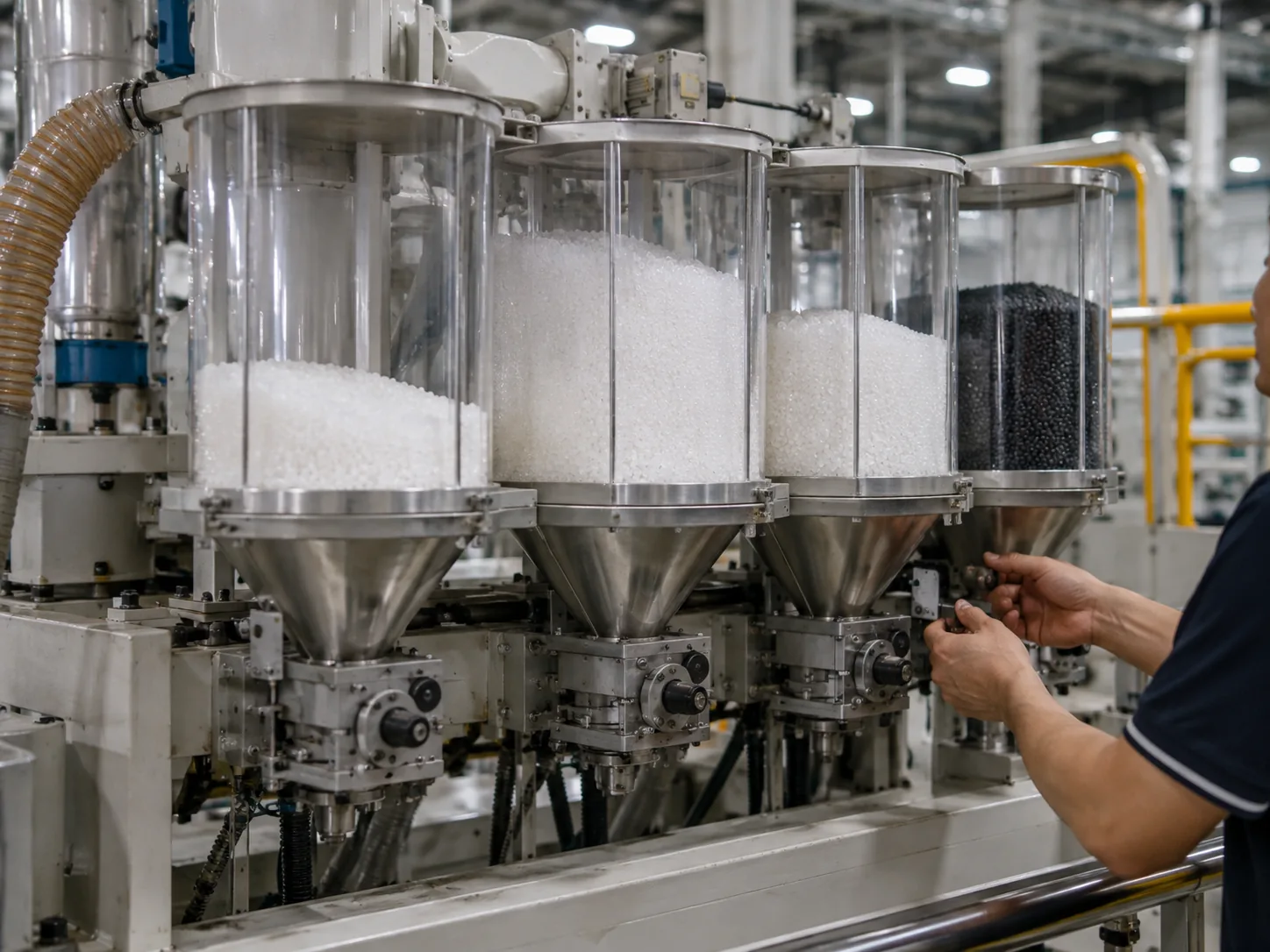
Virgin and where applicable recycled-content resin pellets are weighed and blended with additives — colour masterbatch, slip agents, anti-block agents — to the exact formulation required for the finished film's performance.

Tansox extrudes its own PE and PP film in-house — from raw resin to finished rollstock, without relying on third-party film suppliers. Full control over thickness, layer structure and material composition from the very first step.
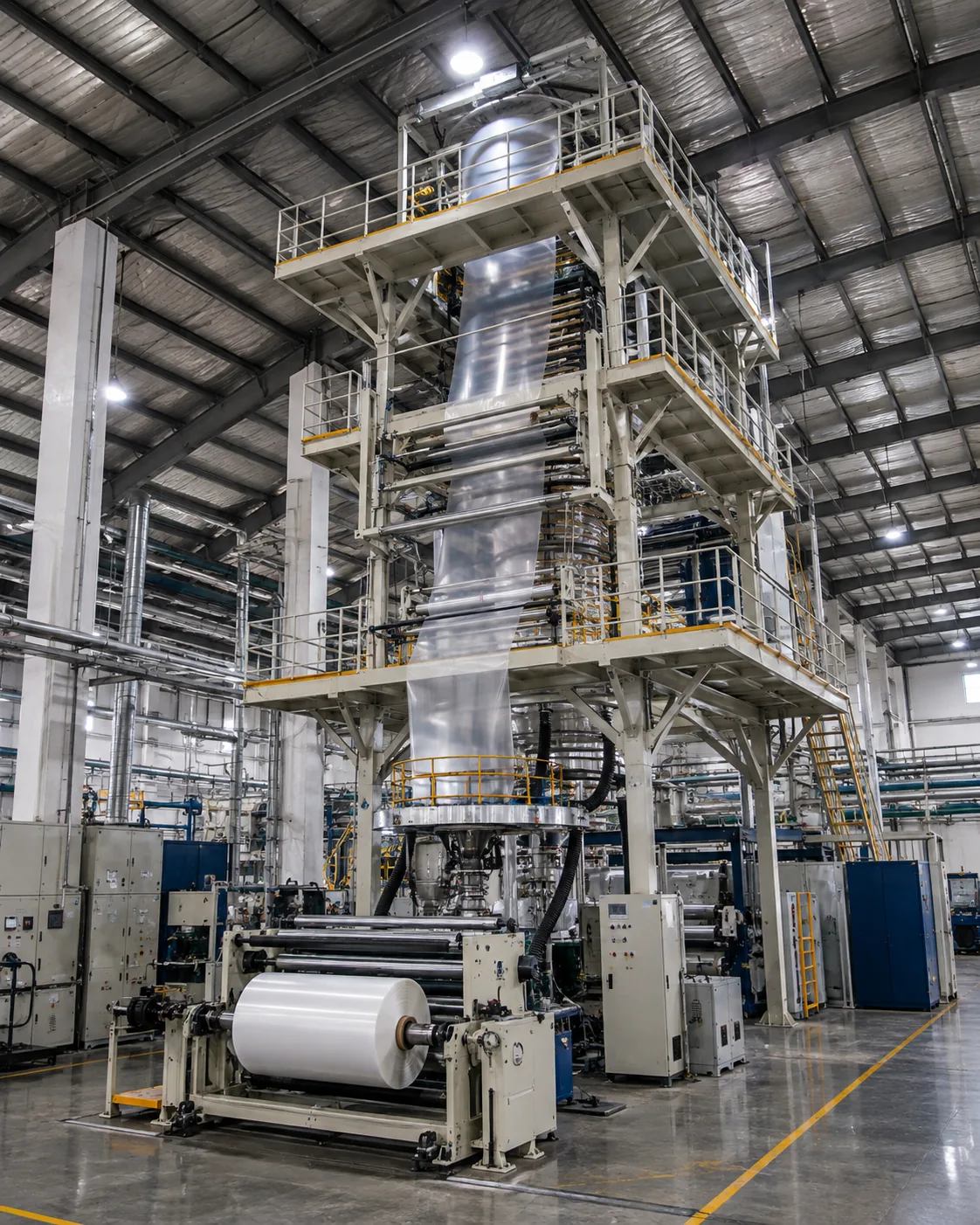
Blown film extrusion is the manufacturing process that turns raw plastic resin into flexible packaging film. Resin pellets are melted and forced through a circular die, forming a continuous tube of molten plastic. Air is blown into the tube to inflate it into a thin-walled bubble, which is cooled, collapsed flat, and wound into rolls — the base material for everything Tansox prints, laminates and converts downstream. Most flexible packaging converters buy their base film from third-party extruders. Tansox extrudes in-house, giving direct control over film thickness, layer structure (mono-layer or co-extruded multi-layer) and material composition — without waiting on an external supplier's lead time or being limited to their standard specifications.
Every metre of Tansox film starts as raw resin and runs through the same four-stage extrusion workflow on our lines in Quanzhou.
Virgin and where applicable recycled-content resin pellets are weighed and blended with additives — colour masterbatch, slip agents, anti-block agents — to the exact formulation required for the finished film's performance.
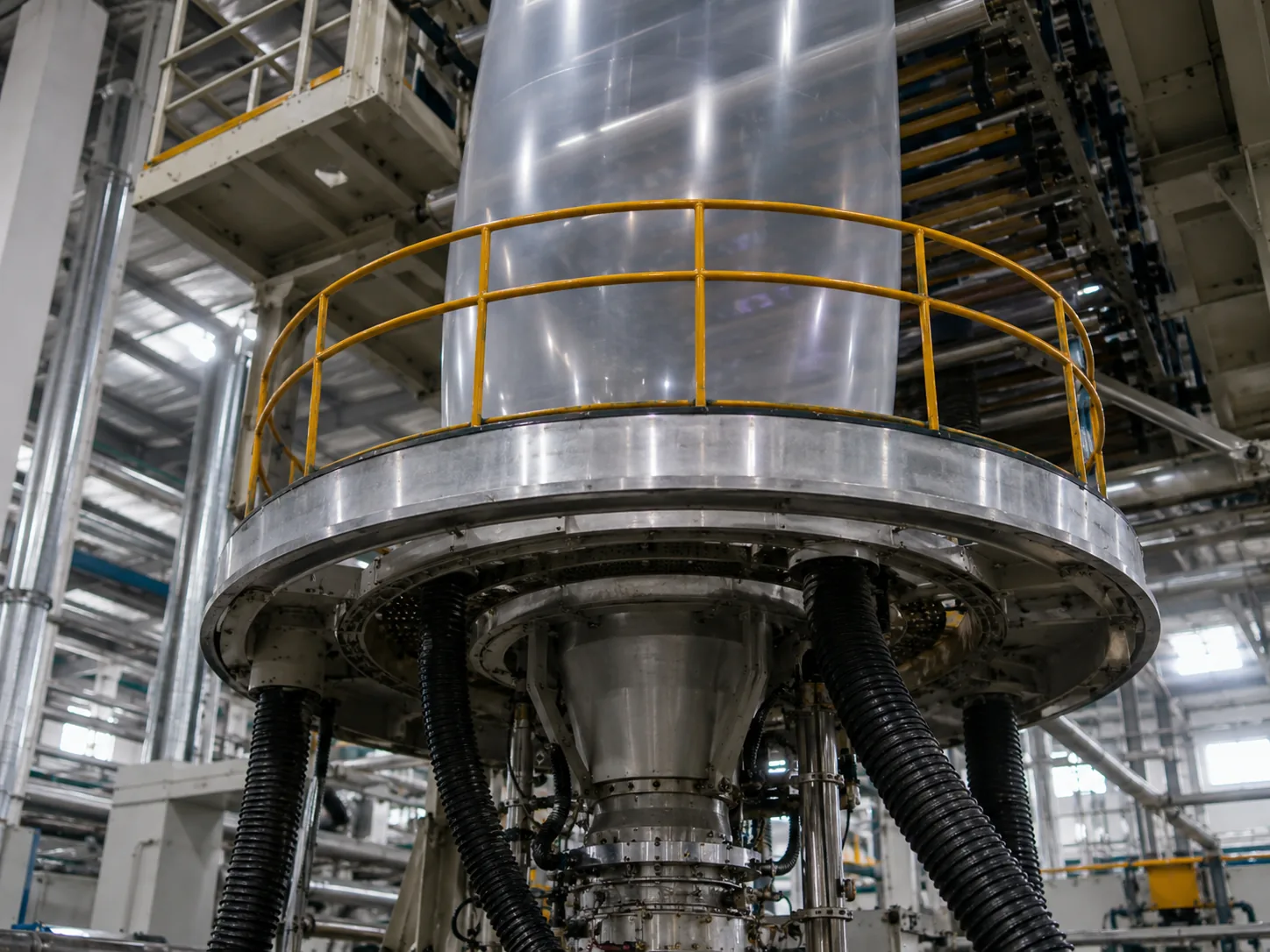
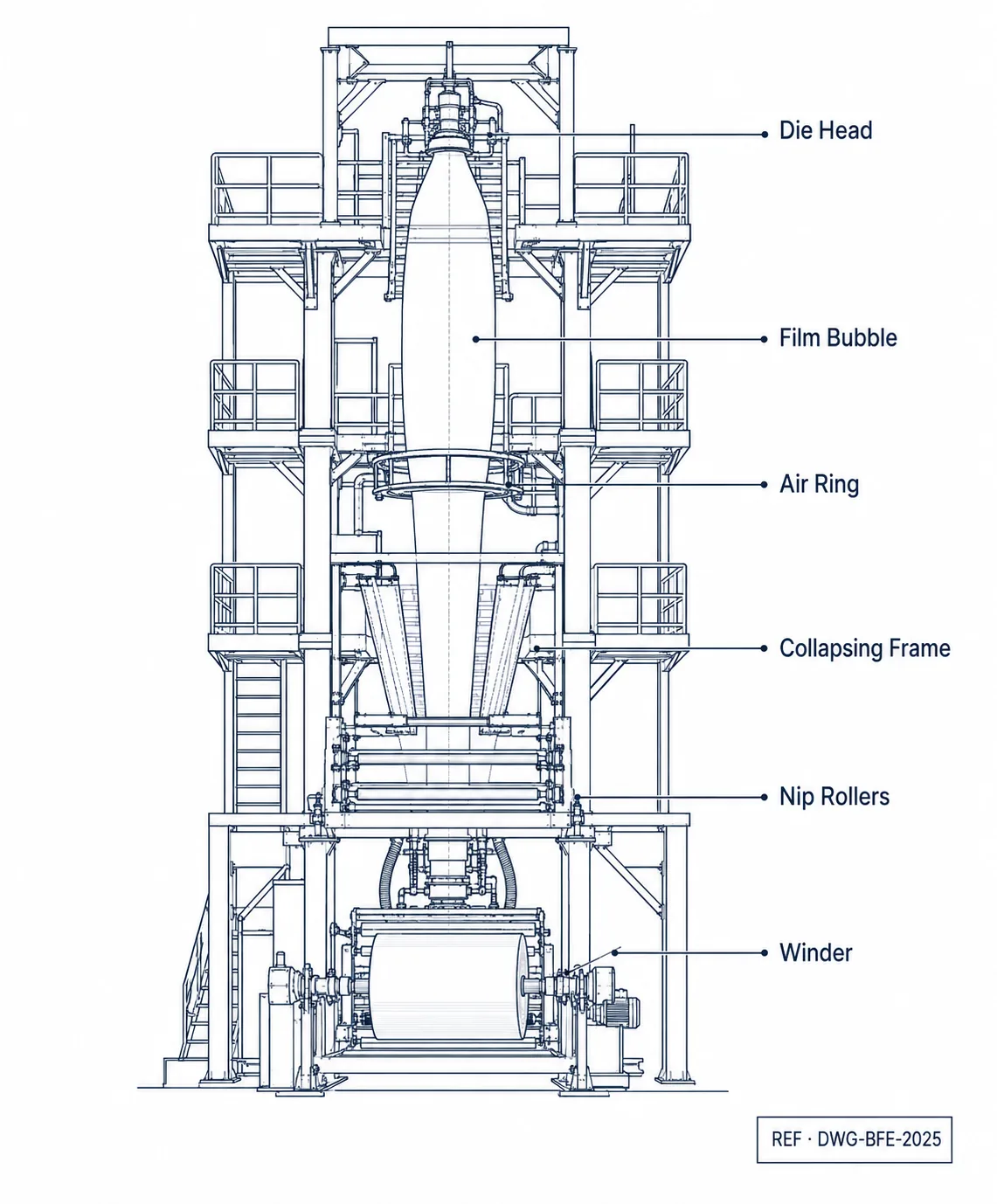
The blended resin is melted and extruded through a circular die. Compressed air inflates the molten tube into a bubble that rises up the extrusion tower, stretching the film to its target thickness and width as it cools. Tower height is what separates a stable line from an unstable one — the taller the tower, the longer the bubble cools before it is collapsed, and the more even the finished gauge.
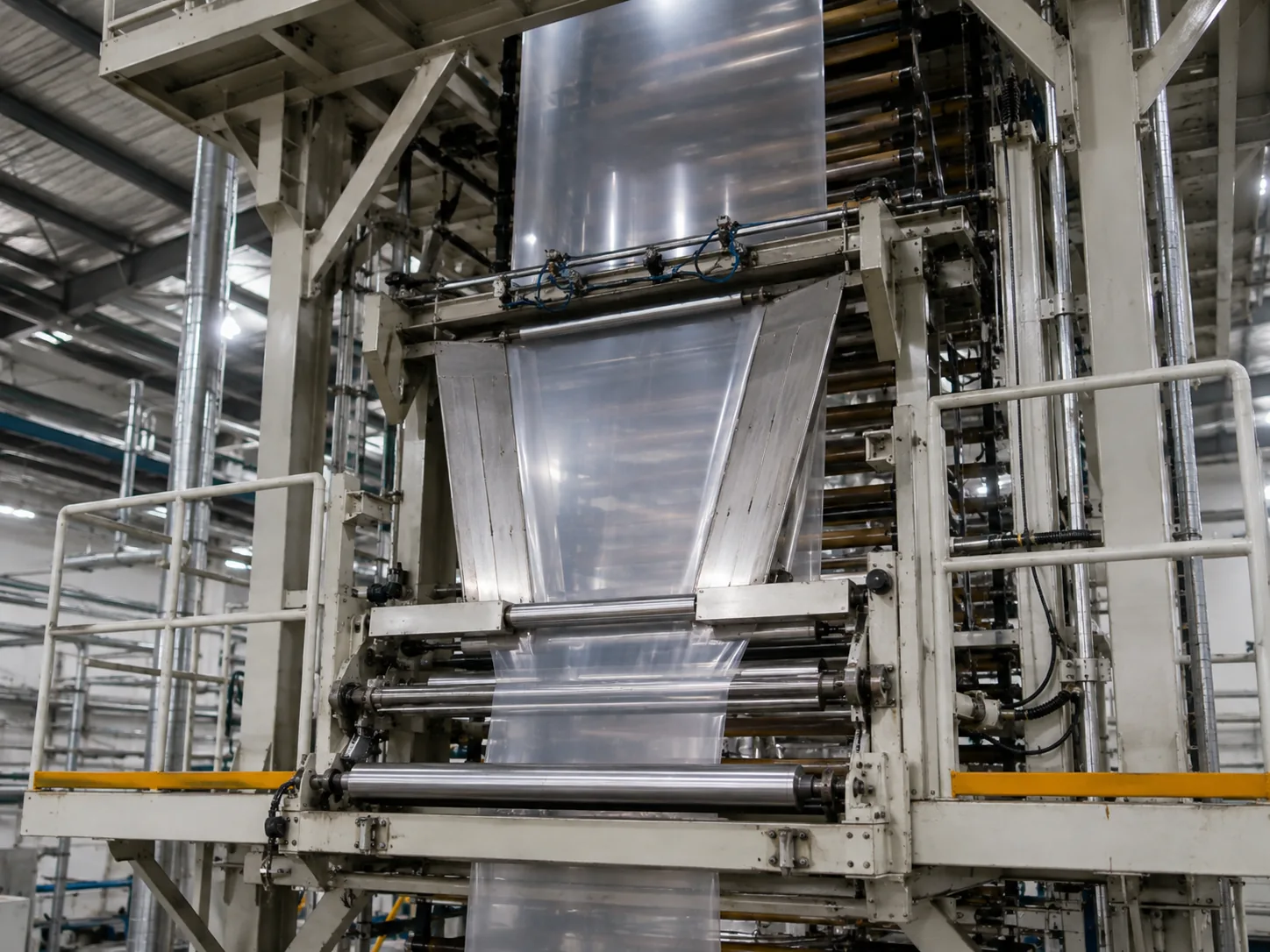
An air ring cools the bubble as it rises. At the top of the tower, collapsing frames flatten the bubble into a double-layer sheet, ready for the nip rollers to seal it into a single flat web.
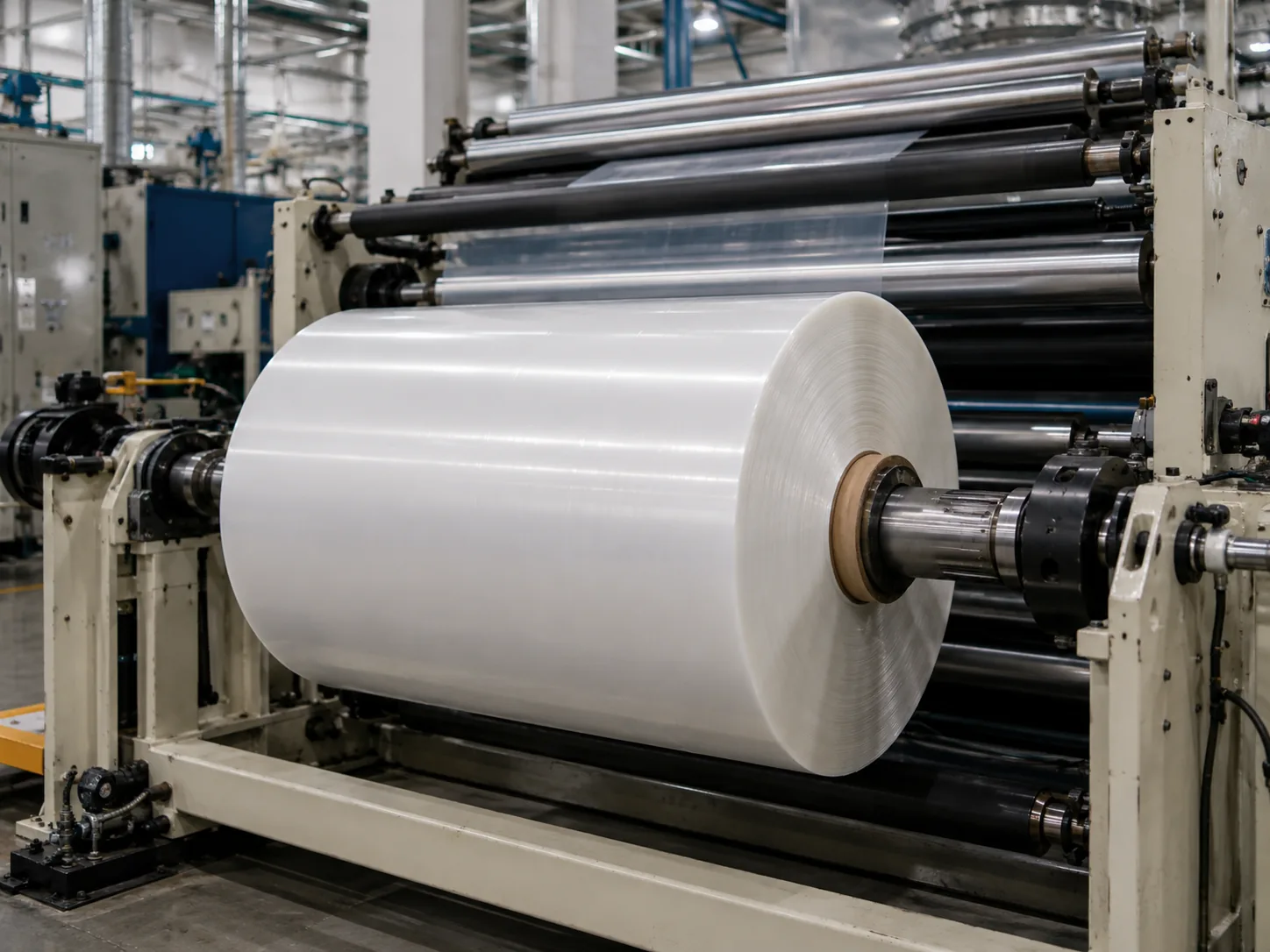
The flattened film is wound onto large master rolls. From here it can be slit to width for direct shipment as rollstock, or fed straight into Tansox's own printing and laminating lines without ever leaving the facility.
The table below covers Tansox's in-house extrusion window. Share your film structure, width and target thickness and we'll confirm feasibility and output for your job.
Tansox-extruded film is printed, laminated and converted in-house for category leaders across these markets. Each market has its own page with material recommendations and product specs.
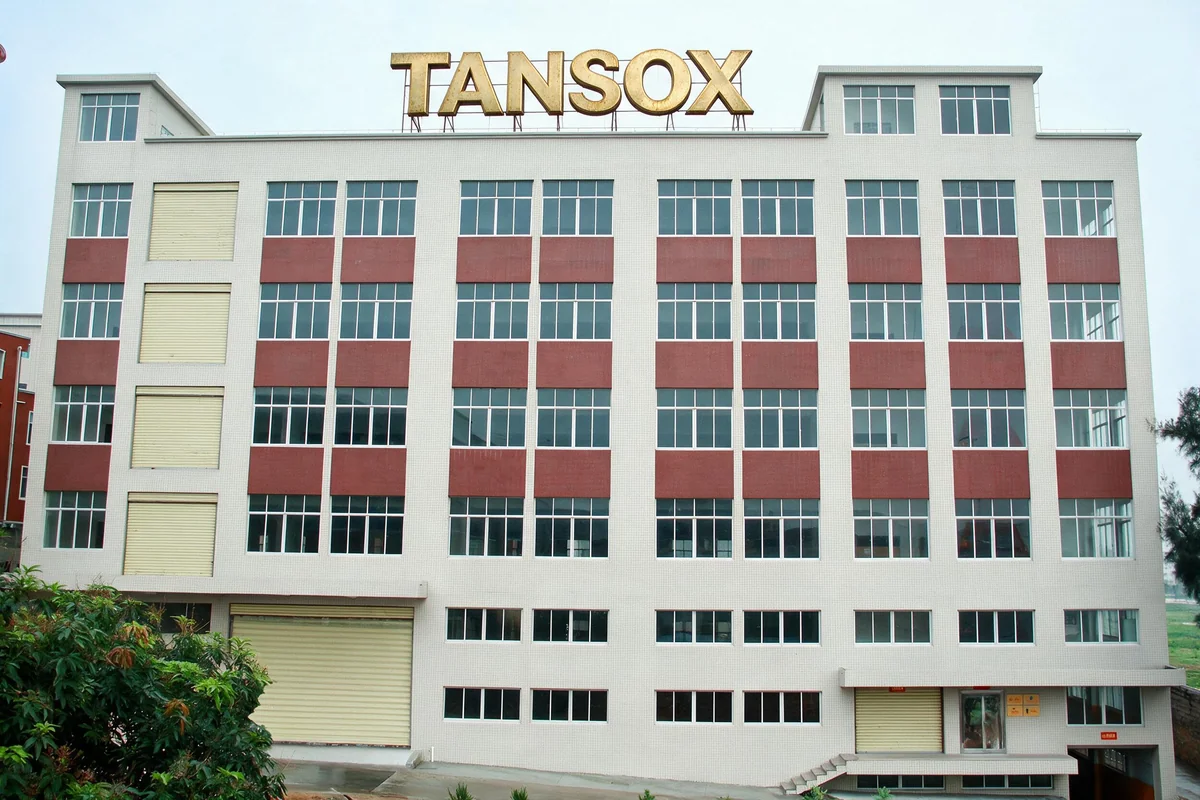
Established 1976 in Quanzhou, Fujian. Three generations of operators on the extrusion and converting lines, with a 220-person workforce on a single shared factory floor.
Tansox operates ISO 9001:2015 and ISO 14001:2015 certified management systems, issued by EACC and accredited by CNAS under the IAF Multilateral Recognition Arrangement. Every production lot ships with COA, retain samples and Pantone colour-match reports.
FOB Xiamen · FOB Quanzhou · EXW available. One consolidated container per customer. Average ocean transit to US West Coast: 18 days.
Yes — because the base film is produced on-site, Tansox can move directly from extrusion into printing and converting without waiting on a third-party film shipment, shortening overall production lead time for custom orders.
Thickness, above all. There is one extrusion process and one base material family — PE and PP resin — and the variable that changes from order to order is the micron the film is drawn to. Tell us the gauge your line needs, mono-layer or co-extruded, and we extrude to that specification.
Yes, and it is worth asking any film supplier about. The taller the extrusion tower, the further the bubble travels before it is collapsed, so the melt cools gradually and the bubble runs more stable. That produces a more even gauge across the web and a more refined, less variable film. Taller lines represent a significantly larger capital investment, which is why not every converter runs them.
It moves straight into bag manufacturing on the same site. Extruded rollstock is printed, laminated where the structure calls for it, and converted into finished bags without leaving the factory.
Fill in the basics — you'll have a structure recommendation and an FOB quote within one business day.