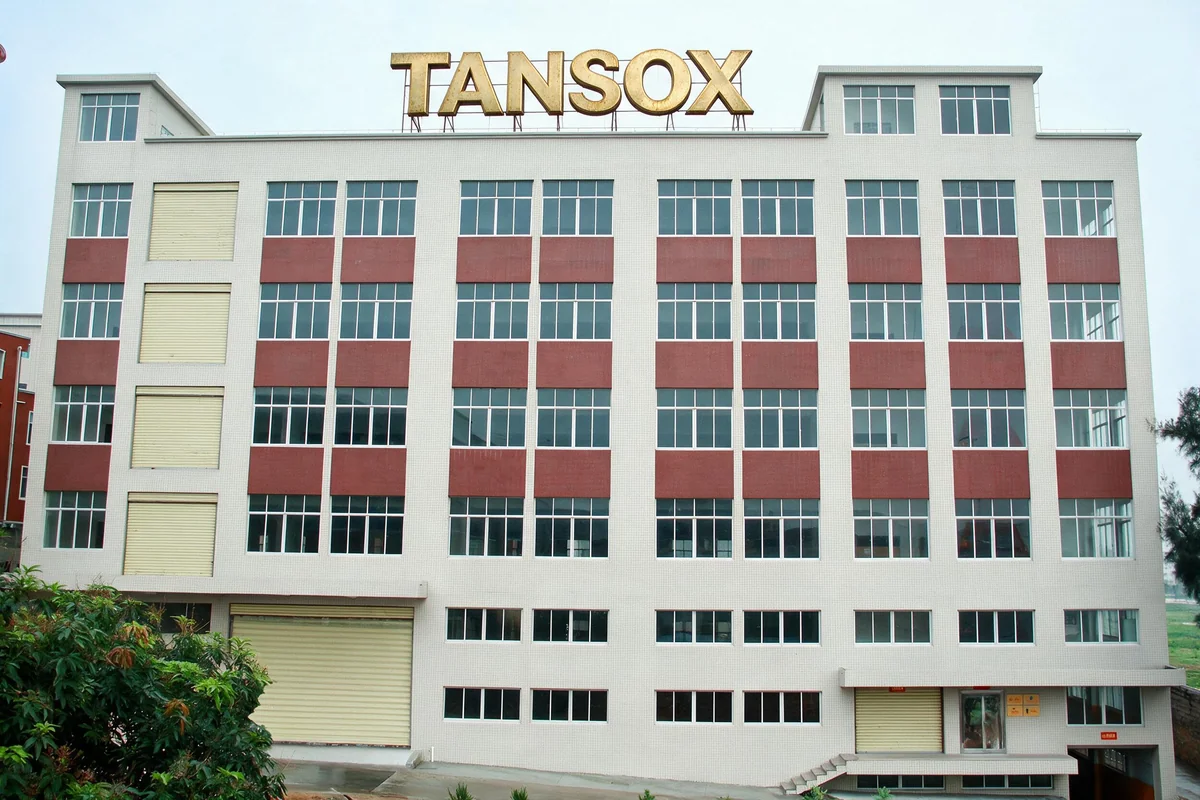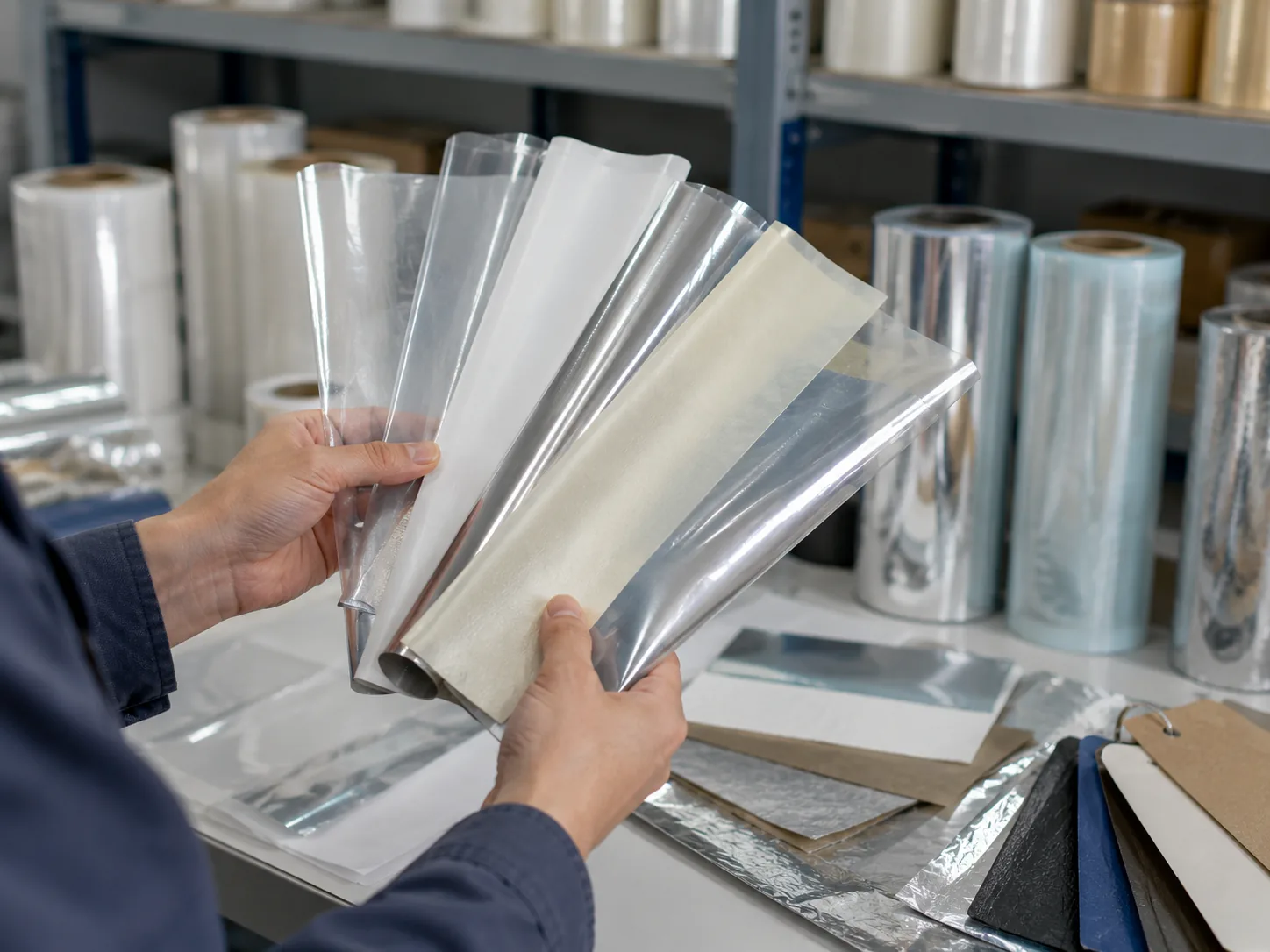
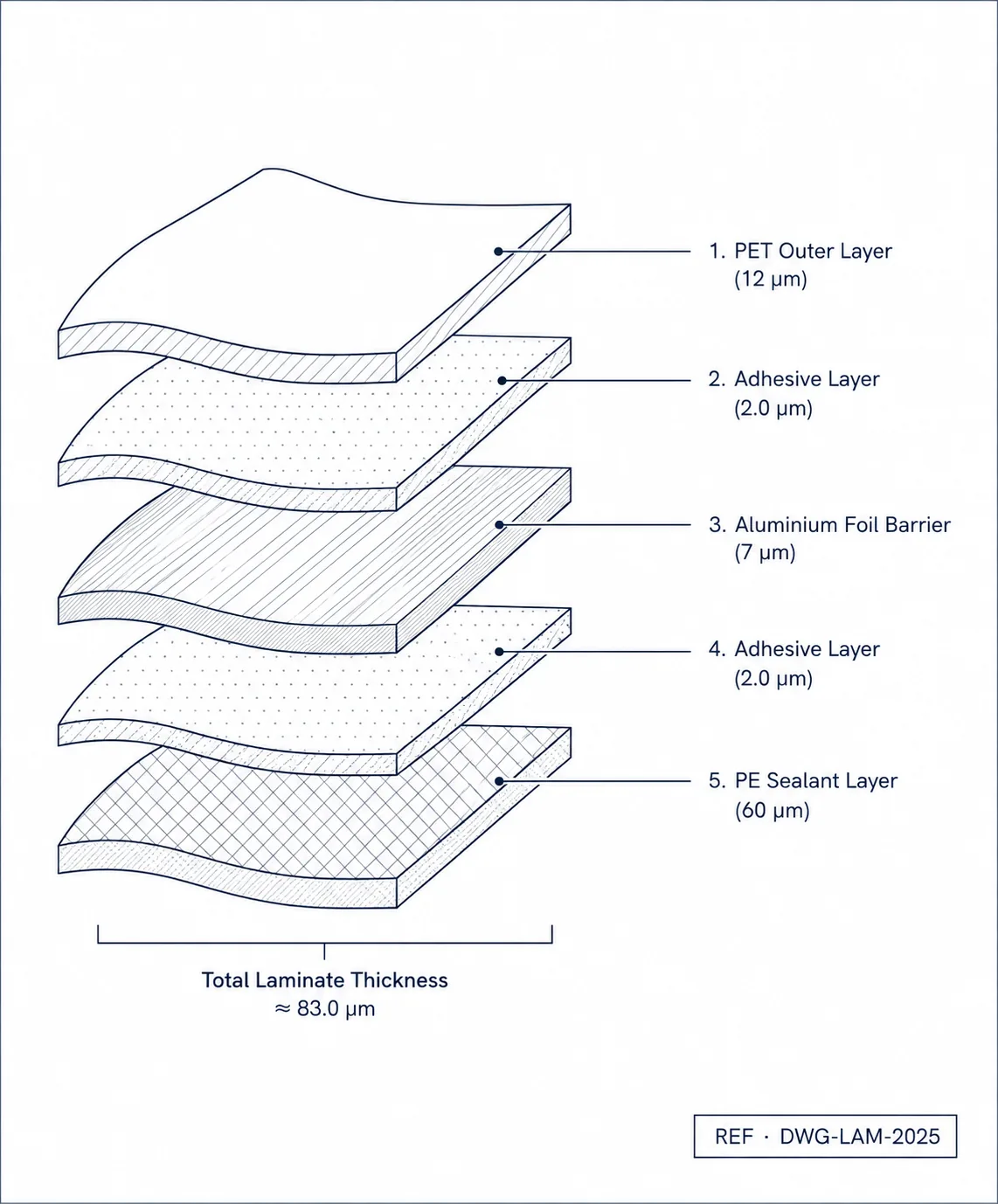
The laminate structure is confirmed based on barrier requirement, substrate compatibility and converting format. Common structures include PET/AL/PE, BOPP/PE, PA/PE and PE/PE mono.

In-house solvent and solventless lamination for flexible packaging — multi-layer barrier structures, ASTM F88 bond tested, medical and hygiene grade, FOB Xiamen.
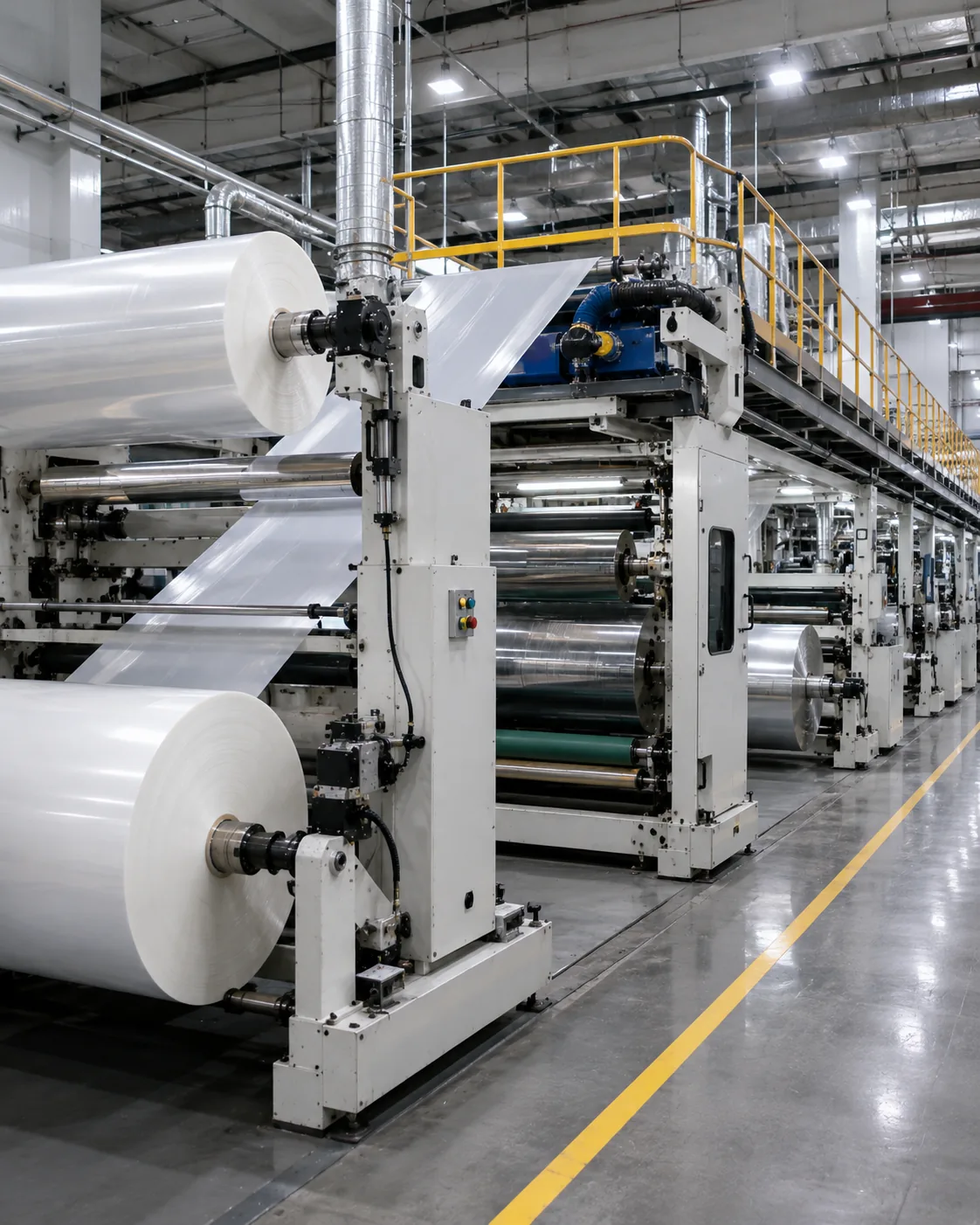
Film lamination bonds two or more flexible substrate layers together using adhesive to create multi-layer structures with enhanced barrier properties, strength and print protection. Tansox runs both solvent-based and solventless lamination lines in-house at Quanzhou: producing high-barrier structures for medical, hygiene and food packaging applications where moisture, oxygen or aroma barrier performance is a specification requirement.
From substrate preparation to bonded, cured film — every lamination order runs through the same four-stage workflow on our lamination lines in Quanzhou.
The laminate structure is confirmed based on barrier requirement, substrate compatibility and converting format. Common structures include PET/AL/PE, BOPP/PE, PA/PE and PE/PE mono.
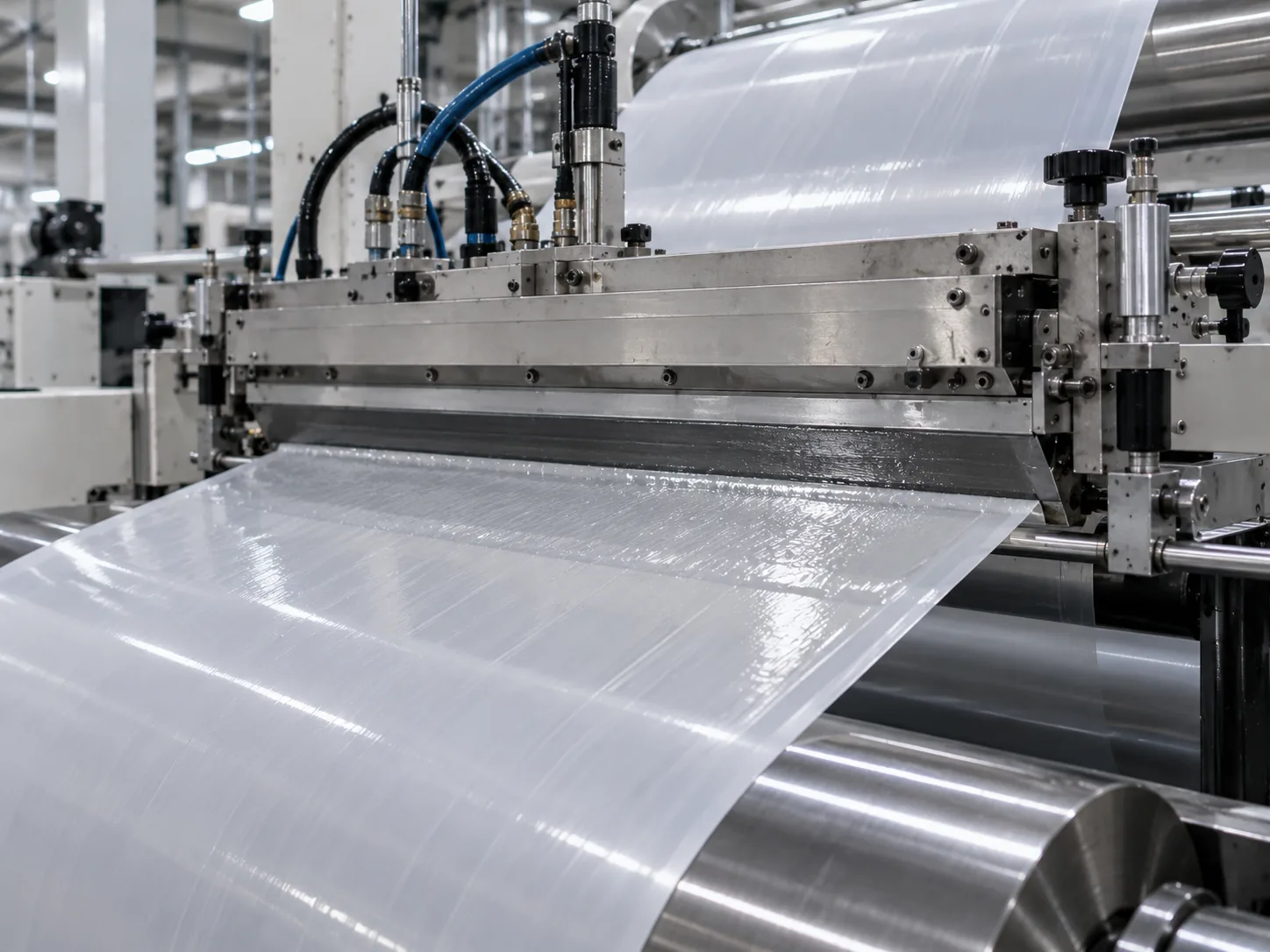
Adhesive is applied to the primary substrate at controlled coat weight. Solventless lamination uses reactive adhesive cured by compression; solvent lamination uses carrier adhesive dried in an oven.
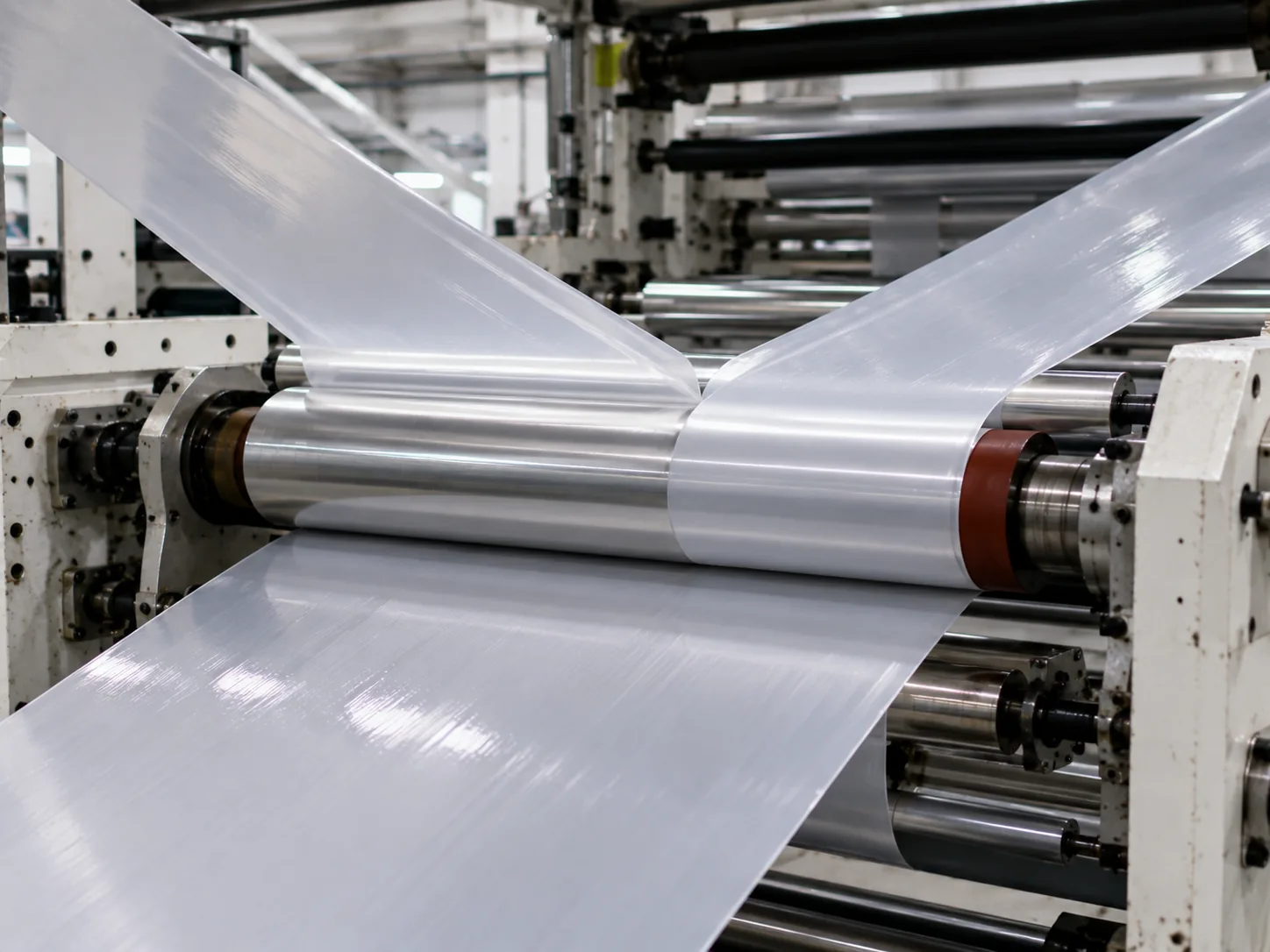
The adhesive-coated substrate is married to the secondary substrate through a nip roller at controlled pressure and temperature, forming the bonded laminate.
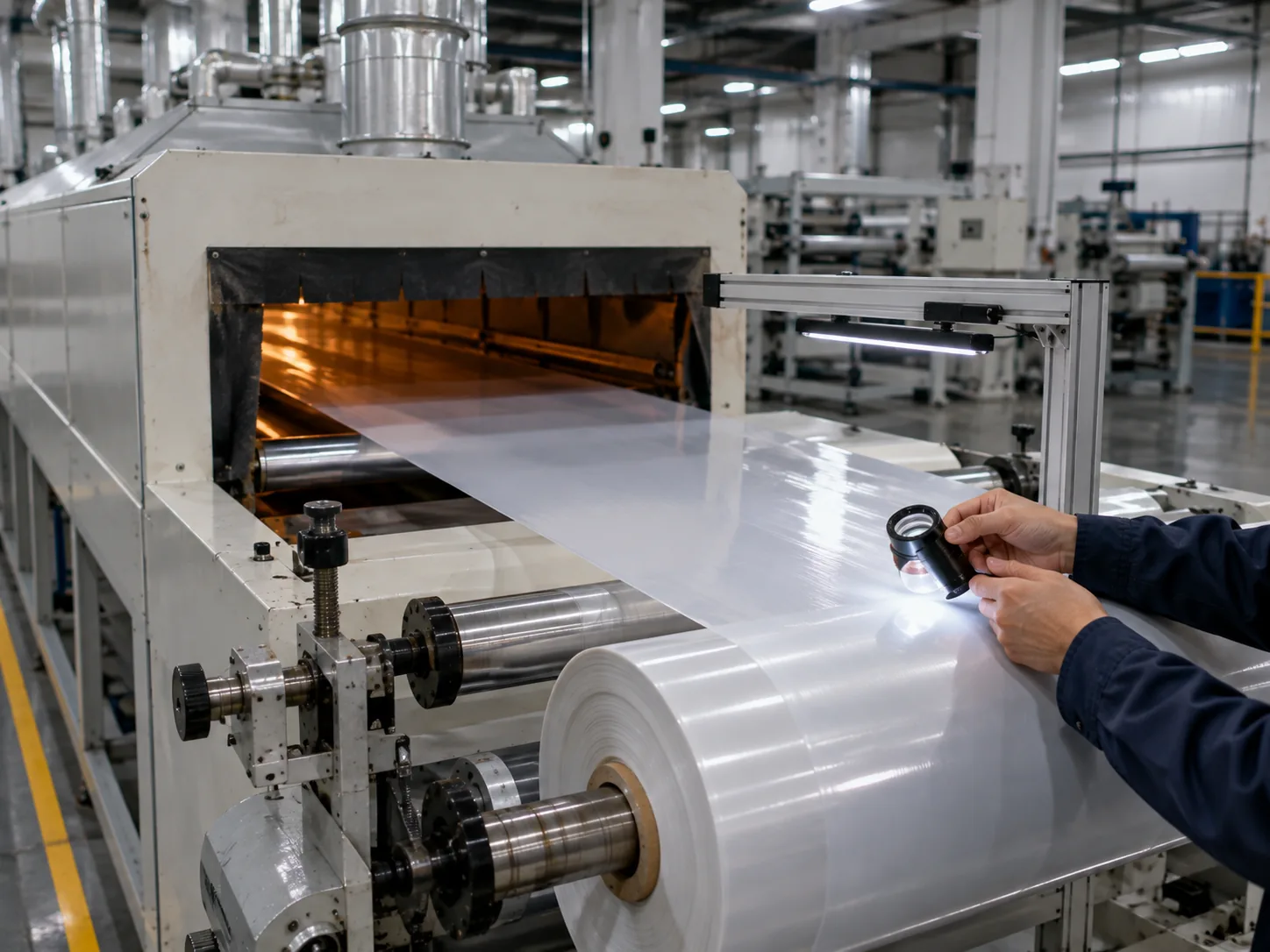
The laminate is cured (aged) to allow full adhesive cross-linking, then bond strength is tested to ASTM F88. Each roll is inspected for delamination, bubbles and tunnelling before dispatch.
The table below covers our standard lamination production window. Share your structure, barrier targets and roll dimensions and we'll confirm feasibility.
Tansox lamination capabilities ship globally for category leaders across these markets. Each market has its own page with material recommendations and product specs.
Five quality checkpoints applied to every lamination order:
Established ~1976 in Quanzhou, Fujian. Deep experience with multi-layer laminate structures for hygiene, medical and food-adjacent packaging applications.
Tansox operates ISO 9001:2015 and ISO 14001:2015 certified management systems, issued by EACC and accredited by CNAS under the IAF Multilateral Recognition Arrangement. Bond testing to ASTM F88 with COA, retain samples and lot traceability on every lamination run.
Lamination, printing, converting and slitting all under one roof in Quanzhou. No outsourced processes, no inter-factory handling, no chain of custody gaps.
Solventless lamination uses a reactive adhesive that cures through compression and heat — no solvents evaporate during the process. It is the preferred process for food contact and hygiene applications. Solvent-based lamination uses an adhesive carried in a solvent that evaporates in a drying oven, allowing for higher coat weight and better performance on difficult substrates. Both processes are available at Tansox.
Barrier performance depends on the laminate structure. Foil-based structures (PET/AL/PE, PET/AL/RCPP) achieve near-zero OTR and MVTR for medical and shelf-stable food packaging. All-plastic structures (PET/PE, PA/PE, BOPP/PE) achieve intermediate moisture and oxygen barriers. Share your barrier specification and we will recommend the correct structure and confirm test data availability.
Standard documentation includes a Certificate of Analysis (COA) with ASTM F88 bond strength test results, lot number and production date. Food contact compliance documentation (EU 10/2011, FDA 21 CFR 177) is available for qualifying structures. ISO 9001 and ISO 14001 certificate copies, issued by EACC, are available on request. For medical packaging buyers we can provide factory audit reports and material traceability records.
Fill in the basics — you'll have a structure recommendation and an FOB quote within one business day.